
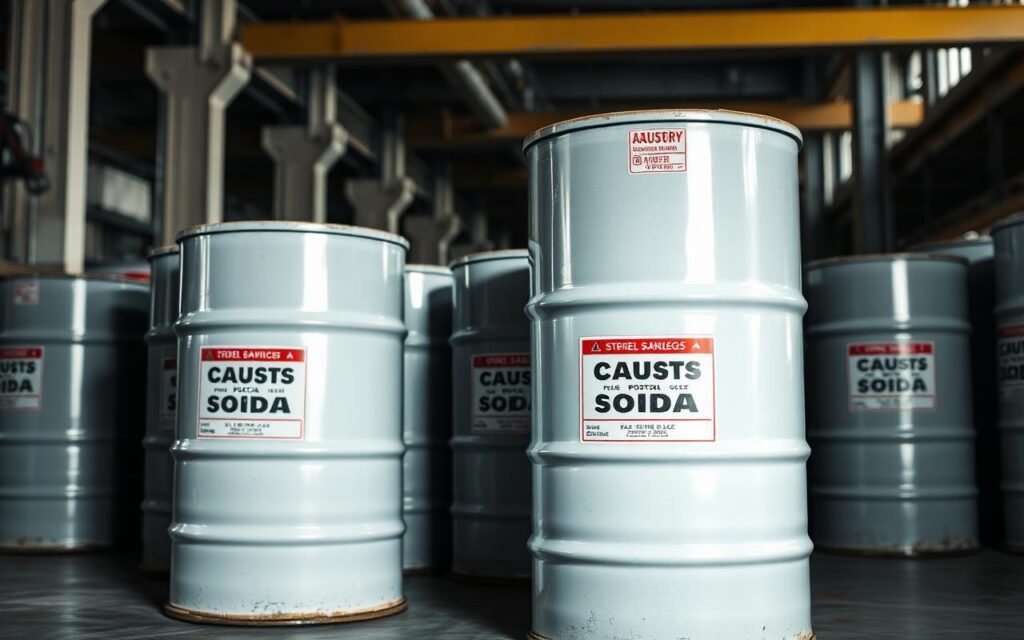
Sodium hydroxide is one of the most-used industrial chemicals in Nigeria. Here is the field-tested guidance Atlas Biochemicals shares with every new buyer.
Sodium hydroxide — caustic soda, NaOH — sits at the centre of soap and detergent manufacturing, water treatment, pulp and paper, textiles, alumina refining and oil & gas operations. Across Nigerian industry, it is one of the highest-volume commodity chemicals moved every month.
It is also one of the most hazardous to handle. Caustic soda causes severe burns to skin and eyes on contact, generates significant heat when dissolved in water, and attacks aluminium, zinc, tin and many gasket materials. A small investment in protocol, storage design and operator training pays back quickly — in avoided injuries, avoided downtime and avoided product losses.
This guide covers the four decisions every new buyer should make before the first drum arrives on site.
Choosing the right form: flake, pearl or 50% liquid
Caustic soda flakes and pearls (also called prills or beads) are both 98–99% NaOH solids. Flakes are thin and irregular; pearls are uniform spheres that flow more cleanly through hoppers and screw feeders. Both are easier to store, dose and meter for low- to mid-volume users — typical for soap plants, small water-treatment installations and laboratory use.
50% liquid caustic removes the dust hazard and the dissolution step entirely, and is preferred by high-volume continuous users (textiles, pulp, large-scale water treatment). It requires dedicated insulated storage and pumping at 15–25°C to avoid crystallisation — neat 50% caustic begins to freeze at around 12°C.
Rule of thumb for Nigerian operators: below ~50 tonnes/month, flake or pearl is usually more economical once you factor in tank, heater and pump capex. Above that, 50% liquid wins on handling cost and operator safety.
Storage essentials and materials of construction
Solid caustic (flakes/pearls) must be stored in dry, sealed HDPE or steel drums and bags, away from acids, oxidisers, aluminium and zinc. Humidity is the silent enemy — open bags absorb moisture from the air, cake hard and release heat.
Liquid caustic at 50% concentration is stored in carbon steel or polyethylene tanks. Carbon steel is the global standard above 38% concentration; 316 stainless is unnecessary and can suffer stress corrosion cracking. Maintain tank temperature above 15°C with band heaters or steam tracing, and always design with a secondary containment bund rated for 110% of the largest single tank.
Vents must be fitted with absorbent filters to prevent CO₂ ingress (which slowly converts NaOH to sodium carbonate and reduces strength). All gaskets in caustic service should be EPDM or PTFE — never natural rubber.
PPE, dosing and emergency response
Operators handling caustic in any form must wear, at minimum: chemical splash goggles, full face shield, neoprene or butyl gloves with long cuffs, splash apron, and full-sleeve cover. For 50% liquid transfers, add chemical-resistant boots and a hard hat.
An emergency eyewash and safety shower must be within ten seconds (and no more than 30 metres) of any dosing or transfer point, with flow tested weekly. Operators should be trained that a caustic splash to the eye is a 15-minute continuous flush, no exceptions.
Critical: never neutralise a caustic spill with acid. The reaction is violently exothermic and creates a worse hazard. Flush spills with copious water to a contained drain, or absorb with vermiculite and dispose as hazardous waste per NESREA guidance.
Sourcing caustic soda in Nigeria
Atlas Biochemicals supplies caustic soda flakes, pearls and 50% liquid caustic to soap manufacturers, water-treatment operators and industrial users across Nigeria. Every consignment ships with a current Certificate of Analysis, MSDS and customs documentation aligned with NAFDAC, SON and NESREA requirements.
Contact our technical team for grade selection advice, sample requests or a current price quotation.