Forex, port congestion and last-mile logistics — the realities of moving industrial chemicals across Nigeria, and how to build a supply plan that actually holds.
Buying industrial chemicals in Nigeria is rarely just about price per tonne. Forex movement, clearing delays, storage costs and last-mile delivery routinely add 20–40% to the landed cost of the raw material itself. Understanding where the friction lives — and pricing it into your supply plan — is the difference between a resilient operation and a series of expensive production stoppages.
This is a short field guide to the three areas Nigerian chemical buyers most often underestimate.
Strategic stocking and SKU velocity
Shipping windows from Asia and Europe to Lagos routinely stretch from a quoted six weeks to a real ten or twelve when peak season, vessel congestion and port-side delays compound. Buyers who only place orders when stock runs low end up paying premium air-freight rates — or losing production days entirely.
Atlas Biochemicals carries buffer stock of the highest-velocity SKUs — caustic soda, citric acid, LABSA, hydrogen peroxide, sodium tripolyphosphate — in our Lagos warehouse so that customers can pull volume the same week they order, even when international shipping lanes are tight. For slower-moving specialty grades, we recommend customers carry a minimum 60-day on-site cover and trigger replenishment on a 90-day cycle.
Documentation and regulatory compliance
Every chemical consignment landing in Nigeria must clear NAFDAC (for food, pharma and cosmetic grades), SON (for industrial standards conformance) and NESREA (for environmental and hazardous-goods compliance). Each agency has its own documentation chain, and a mismatch on any one — wrong HS code, missing CoA, outdated MSDS, expired NAFDAC permit — can hold a container at the port for weeks.
Atlas ships every consignment with a current Certificate of Analysis, MSDS in the SGHS-aligned format, and customs documentation pre-validated against the relevant agency requirements. This avoids the silent killer of Nigerian procurement: a delivery rejected at the gate for paperwork mismatch, with demurrage already running.
Last-mile haulage across all 36 states
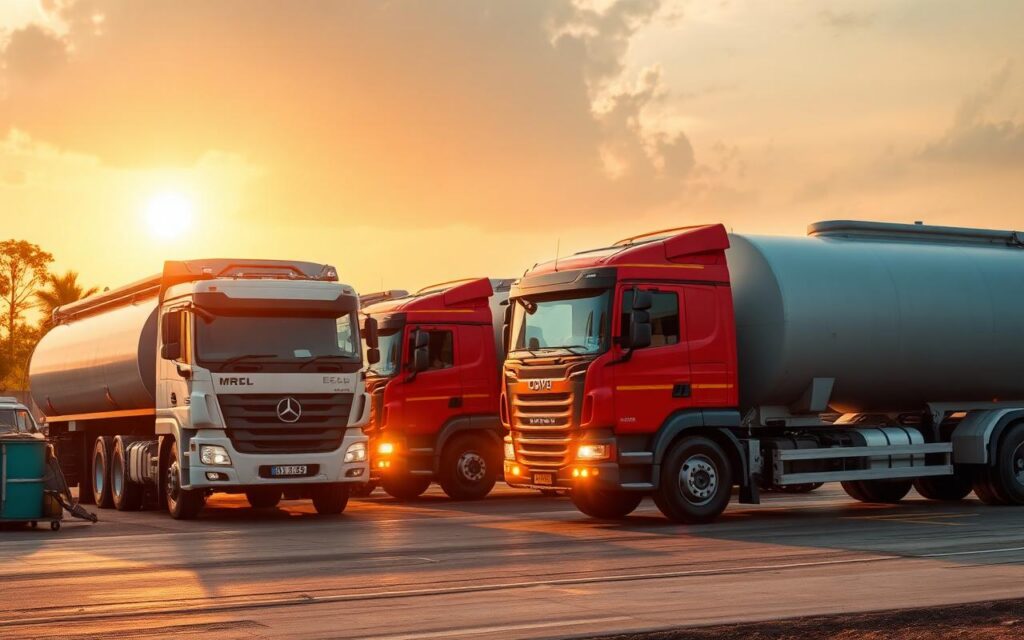
Moving chemicals from Lagos to Kano, Port Harcourt, Aba, Onitsha, Kaduna or Maiduguri is its own logistics discipline. Truck type, axle load, road condition and the hazard class of the product all determine what can move when, and at what cost.
We coordinate haulage nationwide — matching truck type and load to product class so that hazardous goods (Class 8 corrosives, Class 5 oxidisers, Class 3 flammables) move only on certified vehicles with trained drivers, full TREM cards and route plans that avoid major population centres where possible. For non-hazardous bulk goods, we consolidate loads to keep per-tonne haulage costs competitive even at the long end of the trunk routes.
Building a supply plan that holds
The buyers we work with longest treat chemical procurement as a supply-chain discipline, not a transactional purchase. That means: forecasting volumes 6–12 months out, holding strategic safety stock on critical SKUs, pre-clearing regulatory documentation, and partnering with a supplier who can move quickly when something inevitably slips.
Talk to the Atlas Biochemicals team about building a quarterly supply plan tailored to your production schedule.